
Color-changing silica desiccant particles are a useful sort of silica desiccant that comes in two major types for distinct moisture management demands. Both use the porous silica gel structure to soak up water molecules, which lowers the humidity in the air and keeps things from getting damp, moldy, or rusty, which is the main job of any Silica Desiccant.
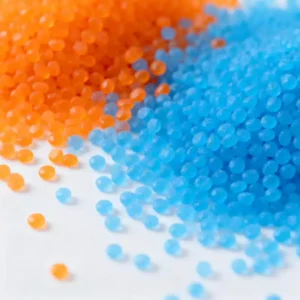
Important Variants and Traits
1. Blue silica gel desiccantIt has a visible color shift that lets you know how humid it is; it becomes pink when it gets too wet. This Silica Desiccant is great for situations where you need to know the humidity level right away. It has cobalt chloride in it, which makes it dangerous, hence it is never used to package food, drugs, or cosmetics.
2. Orange Silica Desiccant: This silica desiccant is safer because it does not include cobalt chloride. It can be used for general drying and moistureproofing in industry. It does not have a color indicator function, but its physical qualities are stable enough to resist cracking and melting, and it can touch most industrial objects directly.
Usage Limits
Color-changing silica desiccant works best between 21 and 32 degrees Celsius. Extreme temperatures make it less effective in adsorbing. They only work in closed rooms (RH>20%) and do not work in open settings since they quickly become saturated. Stay away from strong alkalis and hydrofluoric acid, which might harm the structure of the silica gel.
How to Use and Handle Safely
Put sealed Silica Desiccant in small places and change the amount based on the size of the space. When the blue type is completely discolored, you should replace it. When the orange type has lost all of its ability to absorb, you should replace it. Do not let kids or pets near any Silica Desiccant. Get rid of broken Silica Desiccant right away to keep dust from getting into your lungs. To keep moisture from getting into unused Silica Desiccant too soon, it must be maintained in sealed packaging.